Vega
Turning confusion into glowing confidence
Role
Product Designer

What Vega changed for the people who
used it.

What it delivers.
Real-time skin analysis that detects hydration levels and irritation risk.
A reaction preview that shows how a product will behave before you apply it.
Less waste, because the money is saved before the purchase, not regretted after.
The problem: skincare is overwhelming & wasteful.
When choices overwhelm, confidence fades.
Today's skincare market is overflowing with options. Millions of individuals struggle to navigate the noise, often relying on social media trends that lead to waste, adverse reactions, and frustration. Despite advances in skincare technology, there is still no accessible, affordable tool that provides personalized insight into real-time skin conditions.
The struggle for clear skin.
Too many choices: Thousands of products, endless trends, conflicting advice.
Wasted money: 70% of users have purchased skincare that didn't work.
Harmful reactions: Over 50% have experienced breakouts or irritation from new products.
Lack of personalized data: Most consumers rely on trial and error, not science-backed insight.
Opportunity.
What if you could scan your skin, test a product's reaction, and get instant insight, before you even apply it? That is where Vega comes in.
The logic behind Vega: designing a smarter skincare companion.

Nobody was missing motivation. They were missing information.
To create a genuinely user-centered device, we researched consumer skincare habits, frustrations, and needs.
8 in-depth user interviews with skincare enthusiasts and beginners.
Survey data from 100+ users about their skincare struggles.
14 usability tests on Vega's device and app experience.
Key findings.
88% of users struggle to find products that work for their skin.
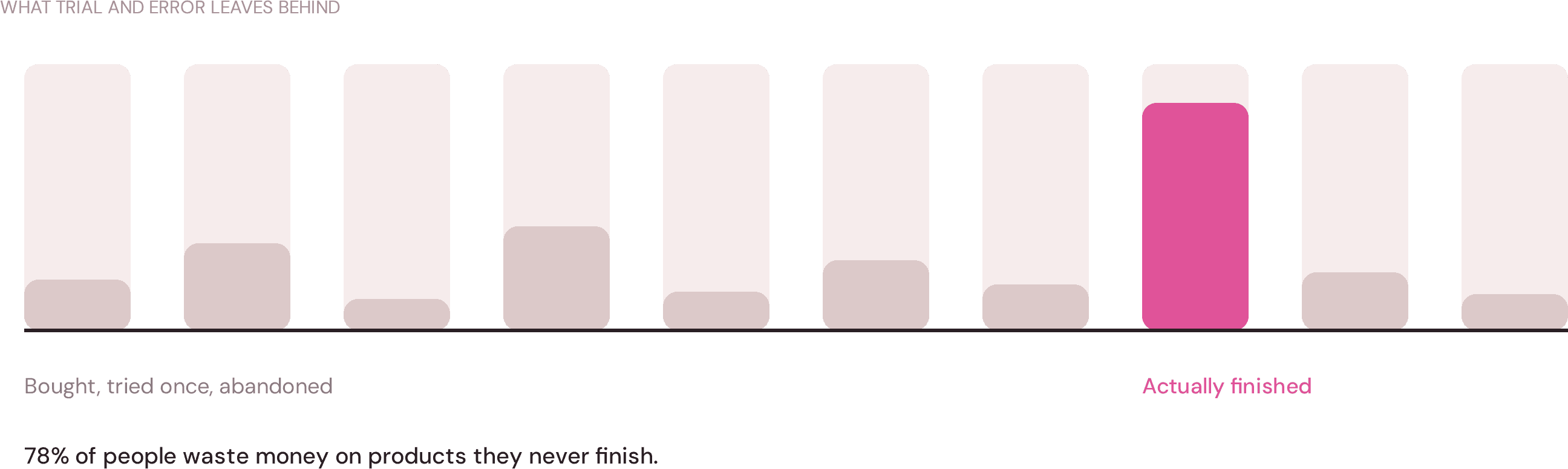
78% waste money on products they never finish.
100% wanted a way to predict skin reactions before buying a product.
The decisions that shaped Vega.
Show the data, or show the answer?
The tension: A full diagnostic readout is more informative. But our users are standing in a shop aisle, not a dermatologist's office, and they need one decision.
What research said: 100% wanted to predict a reaction, not to interpret a data set.
What shipped: An LED signal system. Green, amber, red. The device answers in light before the app explains in detail.
What we gave up: Nuance at the moment of decision, in exchange for a decision that actually gets made.
Recommend products, or predict reactions?
The tension: Recommendation engines are the established model, and every competitor had one.
What research said: AI skincare apps offer general advice but lack real-time diagnostics. Smart mirrors analyze appearance but do not track reactions. Dermatology tests are expensive and inaccessible.
What shipped: Reaction prediction, the thing nobody else was doing, rather than another recommendation feed.
Manual testing, or automatic?
The tension: A manual start gives the user control over when analysis begins. It also adds a step to forget.
What testing said: First-time users hesitated at the start action.
What shipped: An automated test reservoir that begins analyzing the instant a product is applied.
Designing Vega: a user-friendly, science-driven experience.


Scan, test, predict, decide.
Scan your skin: The device analyzes real-time skin conditions.
Test a product: See how your skin would react before applying it.
Get personalized insights: Tailored recommendations based on your skin's needs.
Make smarter choices: Avoid wasting money and reduce overconsumption.
The signal system.
Green, compatible: No irritation predicted. Safe to add to the routine.
Amber, use with caution: Mild reaction detected. Patch test before committing.
Red, do not use: Irritation risk on your skin. Money saved before purchase.
Why existing solutions fall short.
AI skincare apps: Offer general advice, but lack real-time diagnostics.
Smart mirrors: Focus on visual analysis, but don't track reactions to products.
Dermatology tests: Expensive, inaccessible, and require multiple appointments.
Vega fills this gap by offering an affordable, on-the-go solution for real-time skincare analysis.
The road to radiant skin.

We didn't just design. We listened.
Three rounds of prototyping and testing with 14 participants refined Vega's interface and device functionality. Feedback highlighted accessibility needs, usability concerns, and areas for improvement.
Key design iterations.
LED signal repositioned → for clearer scanning feedback.
Automated test reservoir added → begins analyzing instantly when a product is applied.
Scanner simplified → more intuitive for first-time users.
What users loved.
90% found Vega easy to use and integrate into their routine.
80% said it helped them make better skincare purchases.
100% felt more confident in their skincare choices after using Vega.
The Vega ecosystem: A smarter, more sustainable approach to skincare.
Skincare reimagined for clarity and confidence.
Vega offers a seamless blend of technology and design. It scans and analyzes your skin in real time, using a reaction mirror to predict product effects. Through its companion app, users gain personalized recommendations that minimize waste and maximize results. Vega isn’t just a device - it’s a partner in mindful beauty.
The Vega Device.
Advanced Skin Scanner: Detects hydration levels, irritation risks, and product compatibility.
LED Indicator System: Signals safe vs. harmful reactions in real time.
Sustainable Design: Encourages mindful product use and reduces waste.
The Vega App.
Real-Time Skin Analysis: Tracks changes and recommends adjustments.
Smart Shopping Assistant: Suggests only products that match your skin’s needs.
Product History & Routine Builder: Helps users track what works (and what doesn’t).


How Vega is changing skincare for the better.
Key takeaways.
More Confidence: Users can finally make skincare decisions based on science, not guesswork.
Less Waste: Vega helps reduce skincare overconsumption by preventing bad purchases.
Smarter Routines: Personalized, data-driven skincare that evolves with you.